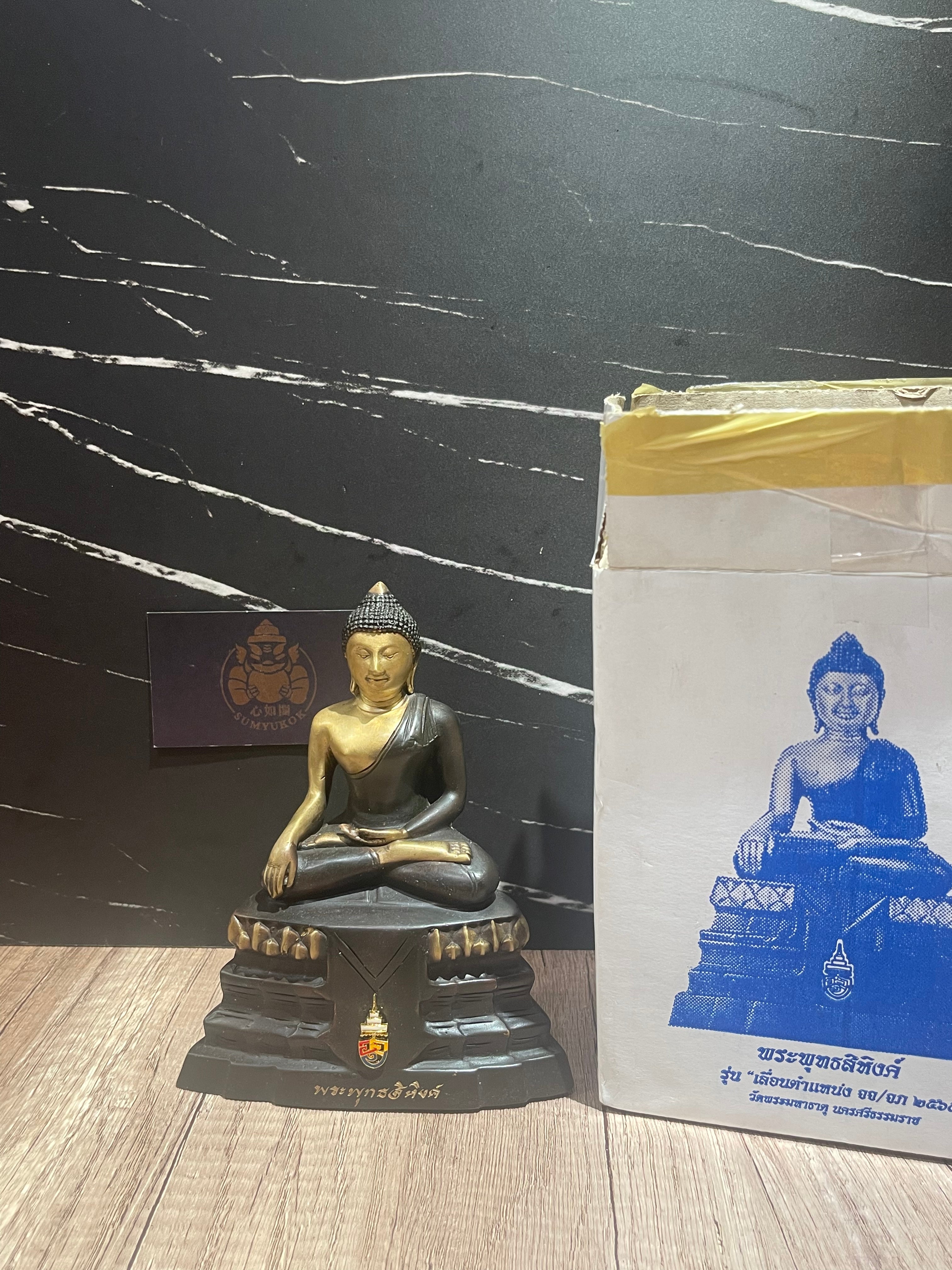
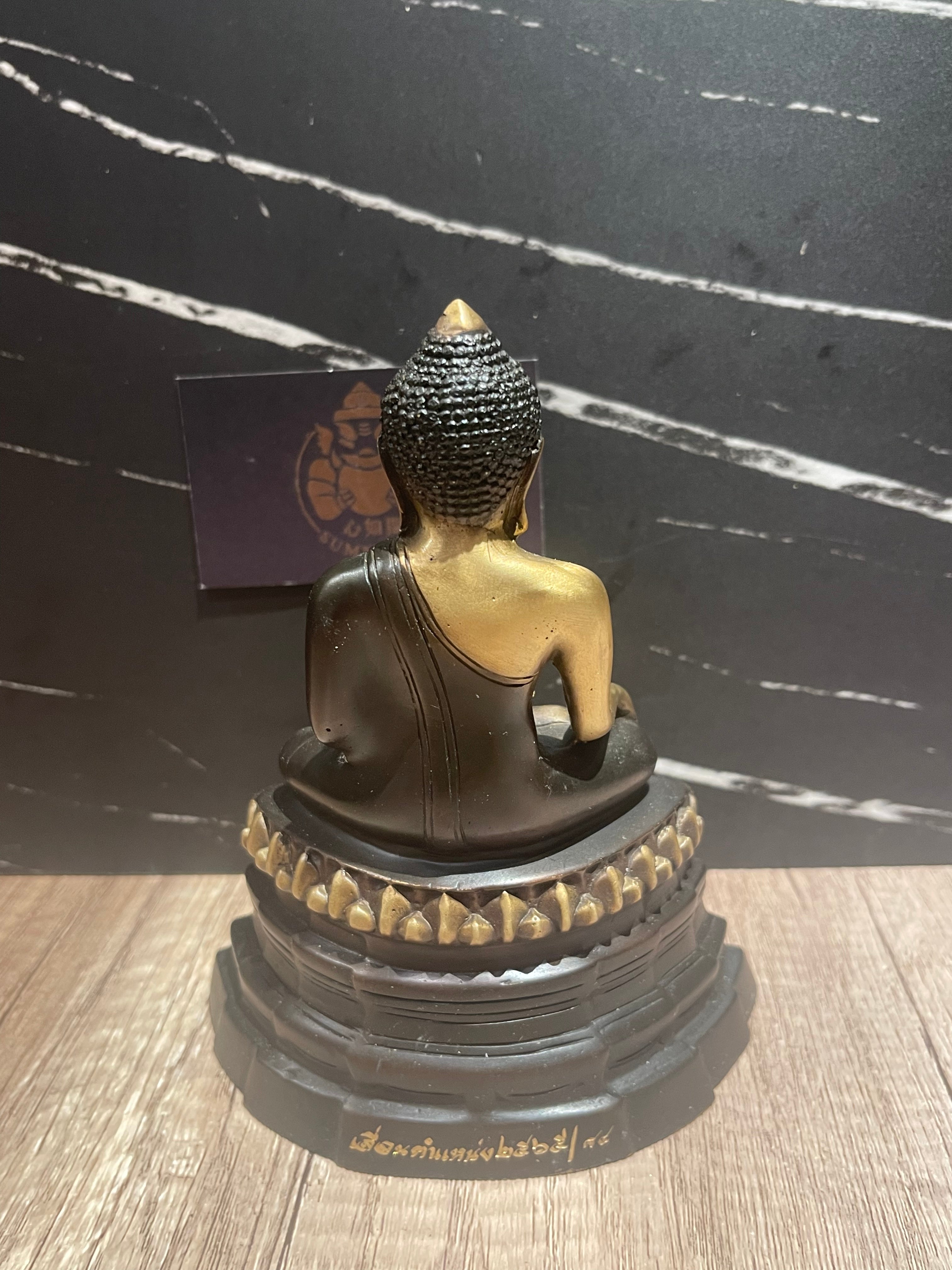
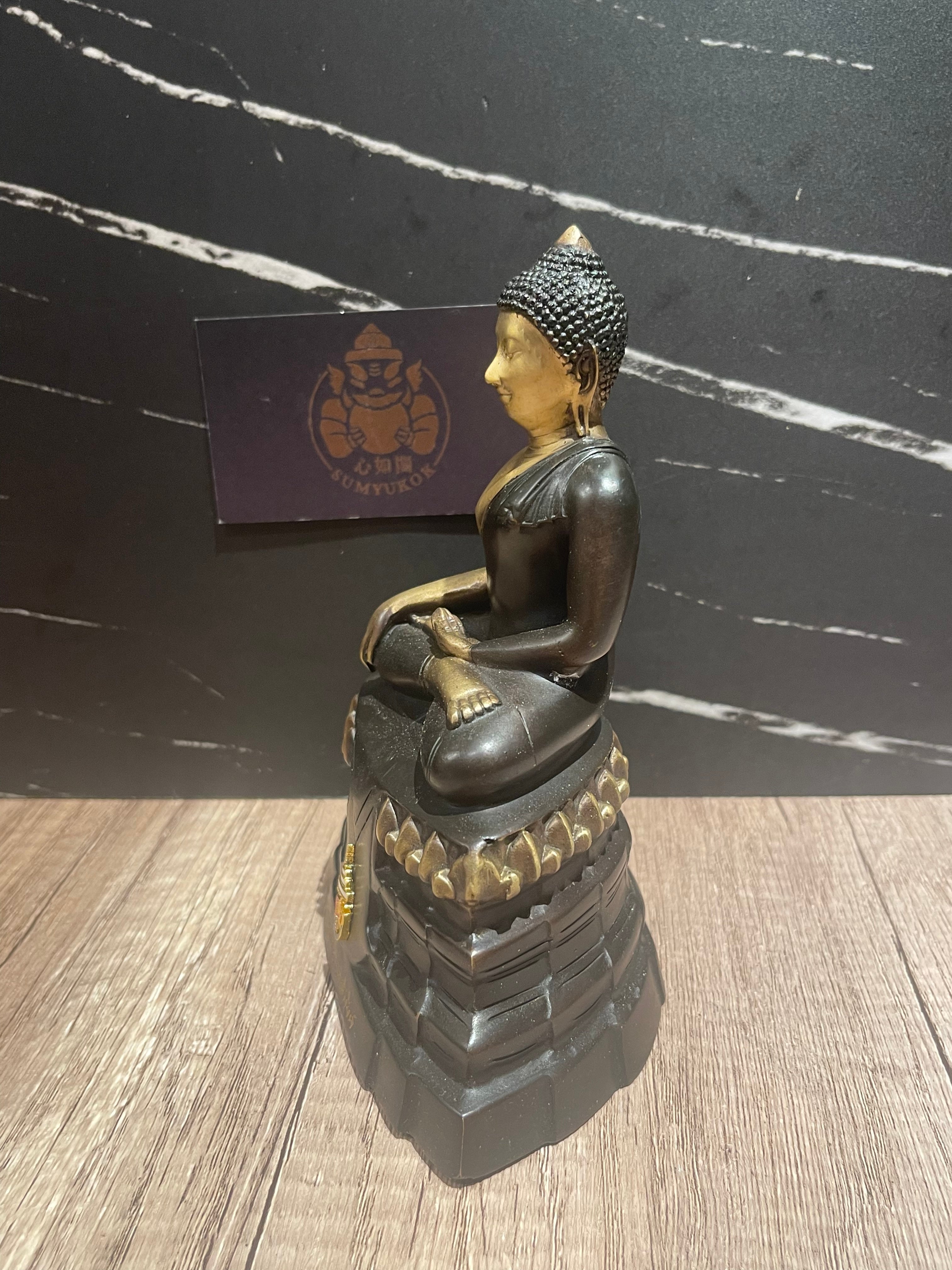
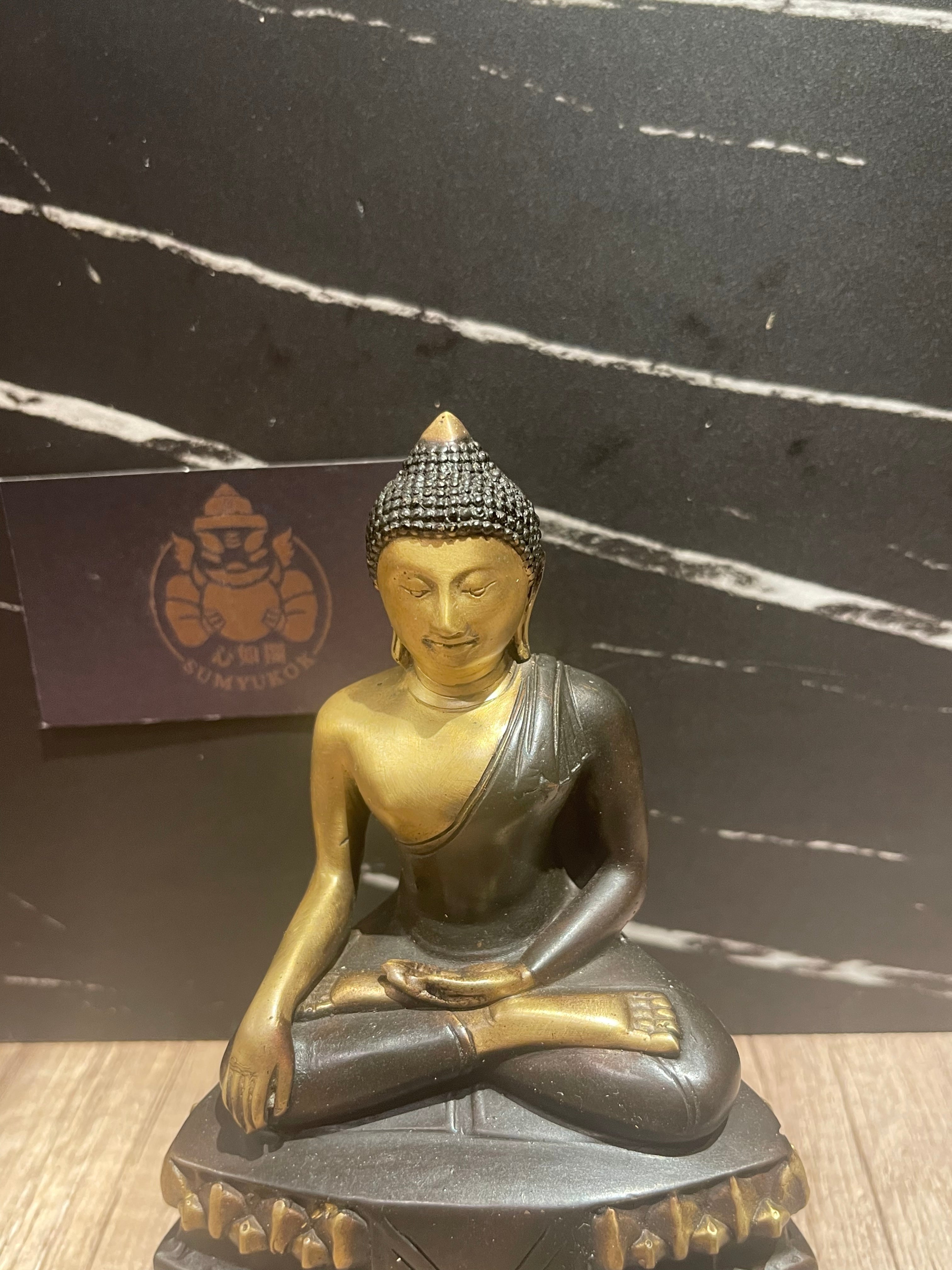
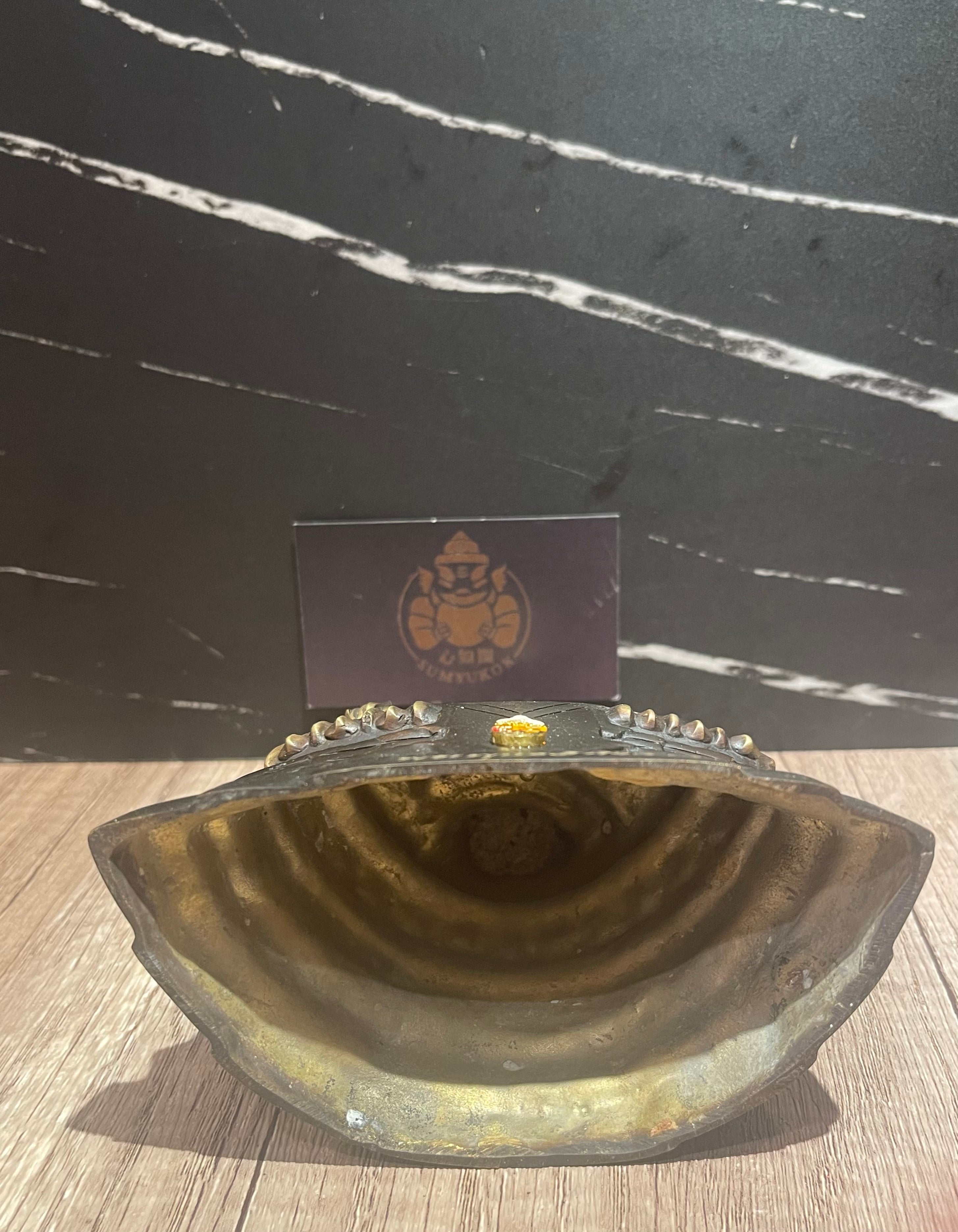
Approximately 16 cm high, 13 cm wide, and 7.2 cm thick.
[Master] A high-ranking monk at Wat Khmahatha
Temple: Wat Khmahathat
[Year] Buddhist Era 2565
【size】 Approximately 23 cm high, 6 cm wide, and 6.7 cm thick.
[Efficacy of Sacred Objects]
The Buddha is primarily believed to ward off evil, protect from danger, attract wealth, improve interpersonal relationships, and ensure safety. Some even believe that the Buddha is the founder of Buddhism, so wearing a Buddha pendant is said to have more significant effects than other pendants, making it suitable for anyone.
It can bring peace and good fortune to the worshipper and their family, ward off misfortune and danger; attract benefactors and good relationships; attract wealth, protect against villains, improve luck, help business and career, and bring happiness.
[Introduction to the Sacred Relic]
Shakyamuni means the founder of Buddhism. The Buddha can have different forms, the most common being: the Emerald Buddha, the Fire Dragon Buddha, the Seven-Headed Buddha, the White Olive Buddha, etc. In Thailand, the Buddha is represented by seven different forms, each representing a different day of the week and its guardian deity.
The Buddha said, "I now speak of the world with my mere body of one fathom; the world arises, the world perishes, the world vanishes, and all traces of the Way are extinguished." Within this scope, the Buddha's suffering was no different from that of any ordinary person. In the Buddha's words, it was "the suffering of birth, the suffering of old age, and the suffering of sickness."
Approximately 2,500 years ago, the Buddha was born in Kapilavastu, a kingdom in central India. His father was King Suddhodana of the Shakya clan, and his mother was Queen Maya. His name was Siddhartha. At the age of sixteen, he married the beautiful royal woman Yasundara. In the palace, he enjoyed a life of immense material wealth and pleasure. Then, at the age of twenty-nine, when he suddenly faced the suffering of humanity, he abandoned his newborn son Rahula, his wife, and his kingdom, and renounced his worldly life by the Anuma River.
For the next six years, he underwent countless practices and asceticism. He first followed the meditator Alara Garan, and later Uddaka Ramaputta, but failing to attain ultimate wisdom, he left them and entered into a life of asceticism, including pacifying meditation and fasting. Still failing to gain wisdom, he then abandoned this path. At the age of thirty-five, the Buddha attained enlightenment under the Natsa tree by the Kayanirana River, having comprehended the Four Noble Truths, the Eightfold Path (Middle Way), and the law of dependent origination, thus establishing the wisdom of Bodhi.
After attaining enlightenment in Bodh Gaya, the Buddha decided to begin spreading his teachings. He first thought of the two great sages, Alara Garan and Uddaka Ramaputta. Upon learning of their passing, he set off for Sarnath in Varanasi to find the five followers who had lived ascetic lives with him. After the Buddha renounced his worldly life, the royal preceptor of Kapilavastu sent five men—Kaundinya, Bhadra, Bhava, Mahanama, and Asvashi—to join him and care for him. During the six years of the Buddha's ascetic practice, the five remained by his side. Later, when the Buddha abandoned asceticism and accepted food and drink from shepherdesses, the five mistakenly believed he had given up his spiritual path and left him to continue their ascetic practices in the Sarnath forest. The first sermon is reminiscent of the Gupta Sarnath school of Buddhism. Sarnath was an ancient place where emperors kept deer, and it contained a grove of ascetics. It is said that when the Buddha arrived at Sarnath, the five disciples, including Kaundinya, conspired to ignore him, believing he had ceased his ascetic practices and was no longer worthy of respect. However, when the Buddha instructed them, saying, "Whether a practitioner can realize the truth depends not on asceticism, nor on indulgent pleasures; neither extreme of suffering nor pleasure is the true cause of enlightenment," the five disciples were convinced and together took refuge in Buddhism.
This time, the Buddha stayed in Deer Park for three months. This was Shakyamuni's first sermon, known in Buddhist history as the "First Turning of the Wheel of Dharma." From then on, the Buddha lived and taught in the world from Deer Park, giving more than three hundred sermons and converting thousands of disciples.
The scene following the Buddha's first turning of the Wheel of Dharma is already described in a mythical way in the *Dhammapada Sutta*. The gods on earth cried out, "In the Deer Park in Varanasi, where the sage fell, the World-Honored One has turned the supreme Wheel of Dharma. No ascetic or Brahmin, no god, Mara or Brahma, no human being in the world can reverse it." The Four Heavenly Kings, hearing the cries of the earthly gods, echoed the same cry. Immediately, all the gods in heaven echoed the same cry, all the way to the Brahma realm; the entire universe trembled and shone with great light.
In later Buddhist scriptures, including the Pali Canon, some mythologized descriptions of the Buddha's first sermon were added. On the Buddha's journey to Sarnath, the Mahavagga and the Amitayus recount how the Naga king Suddhodana invited the Buddha to stay overnight and offered him food . When the Buddha reached the Ganges, he had no money to pay the ferry fee, so he used his supernatural powers to leap across the Ganges.
When the Buddha first turned the Wheel of Dharma for five monks, ten jeweled seats appeared on the ground for him to sit and preach. The Buddha sat on the Dharma seat, radiating great light that illuminated the three thousand great chiliocosms. The three thousand great worlds vibrated in six ways, revealing eighteen auspicious omens. Tens of thousands of Bodhisattvas, Indra, Brahma, and all the gods from the four cardinal directions and above and below came to pay homage to the Buddha's feet and listen to his teachings.
[Temple Introduction]
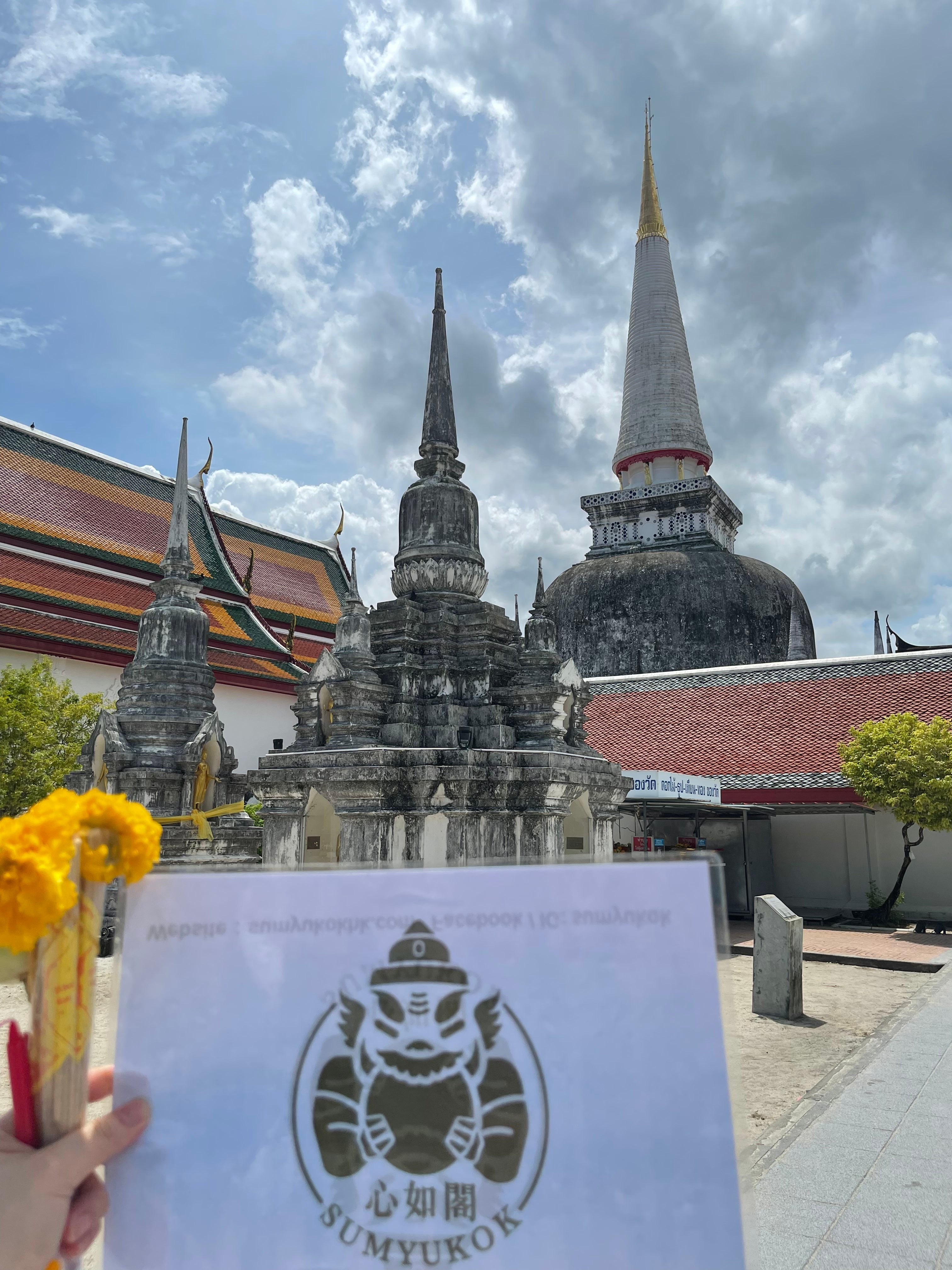
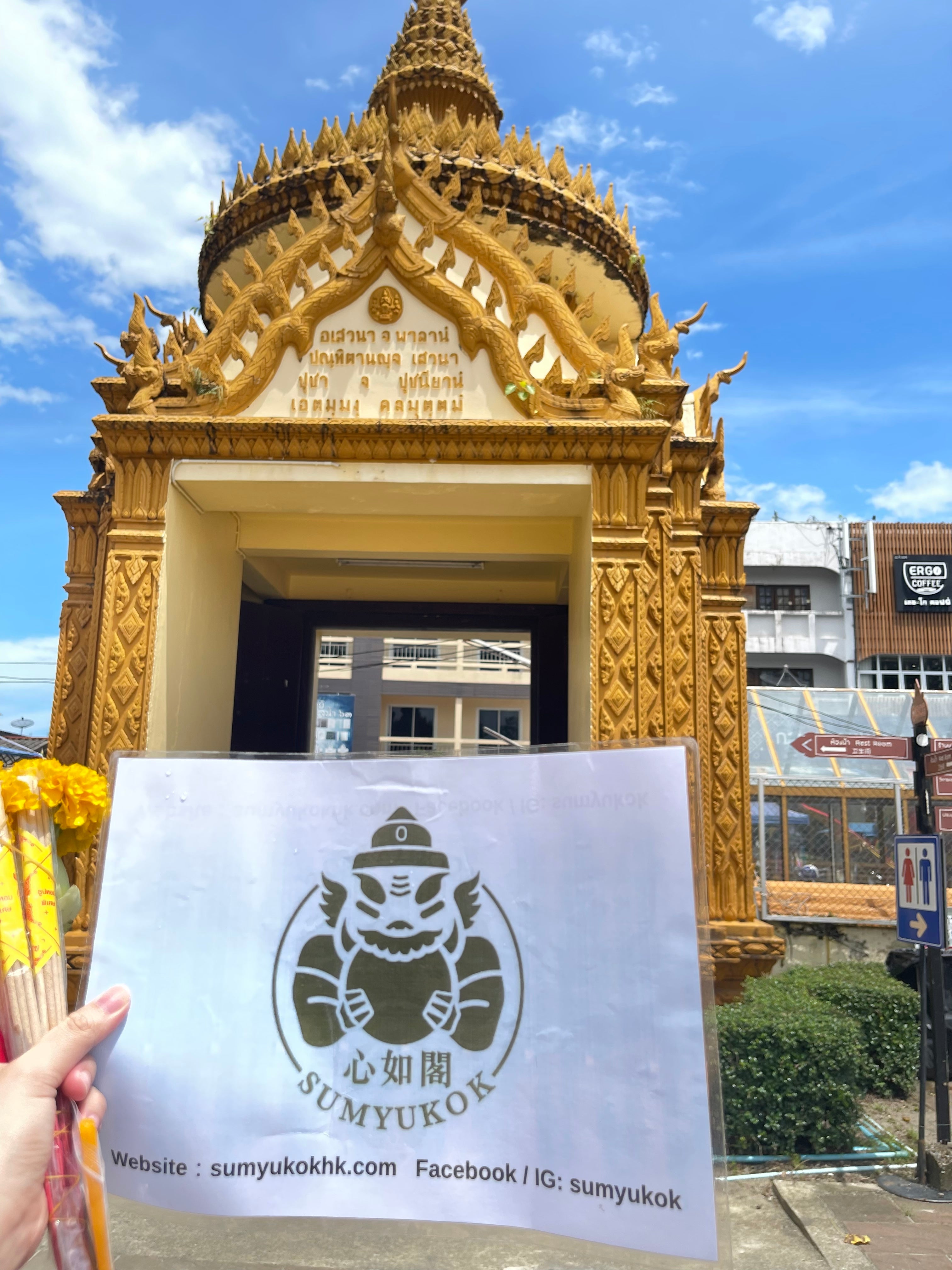
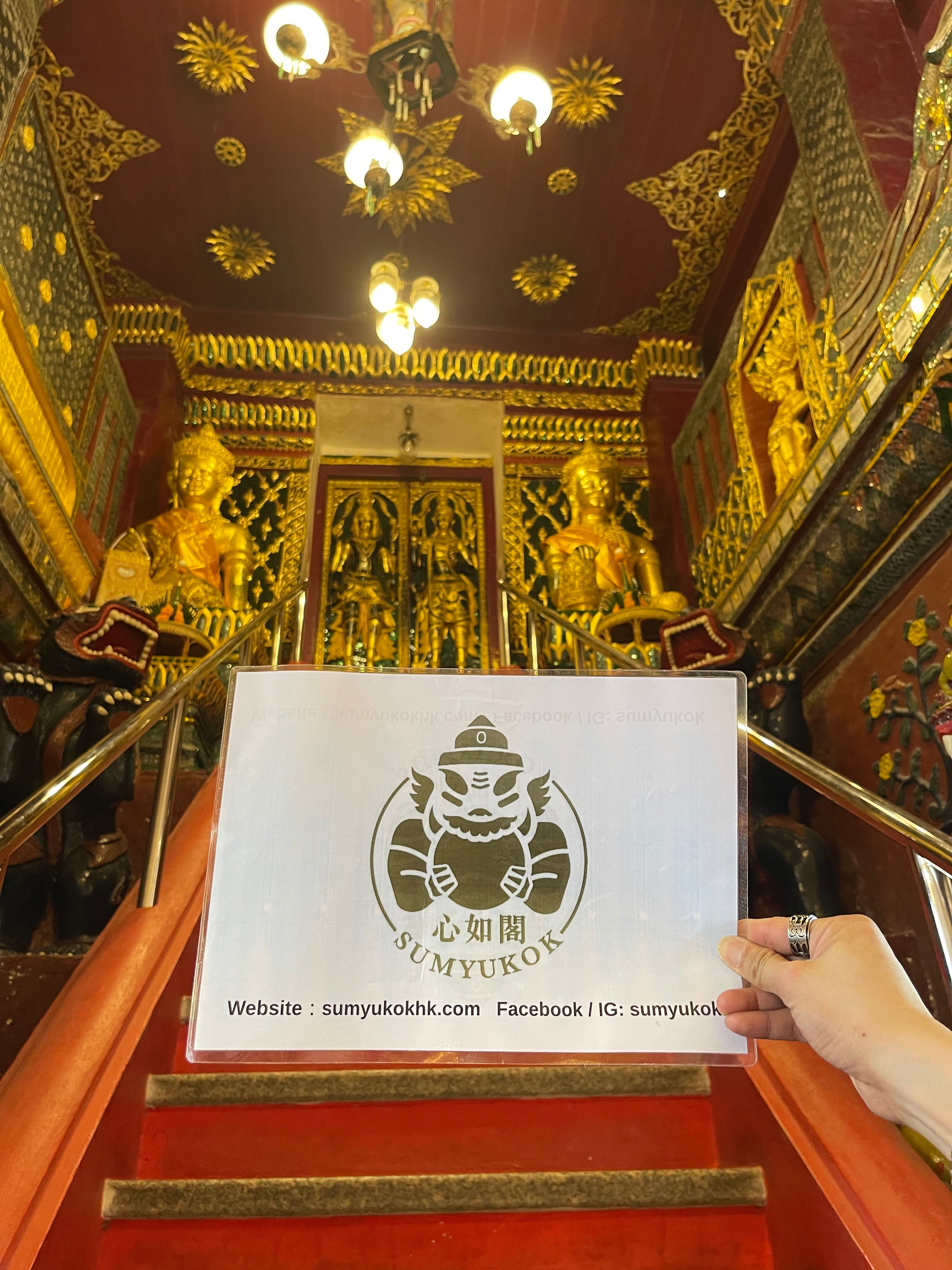
Wat Maha Tha is located in Nakhon Si Thammarat Province in southern Thailand. Also known as Jinta Temple The main stupa was built in the 13th century . Wat Mahathat is a famous Buddhist holy site in Thailand. The emblem of Nakhon Si Thammarat province features the Wat Mahathat main stupa, also known as the Wat Mahathat. In 2012 , Wat Mahathat was included in Thailand's tentative list of World Heritage Sites.
The temple is famous for its consecrated amulets and statues of deities.
Every year on the 15th day of the third month of the Buddhist calendar, The celebrations held at Wat Mahathat during the Wan Phra festival. On the day of the celebration, Thousands of believers carried sacred cloths. Enter the temple and walk around the main stupa three times. To pray for blessings and peace.