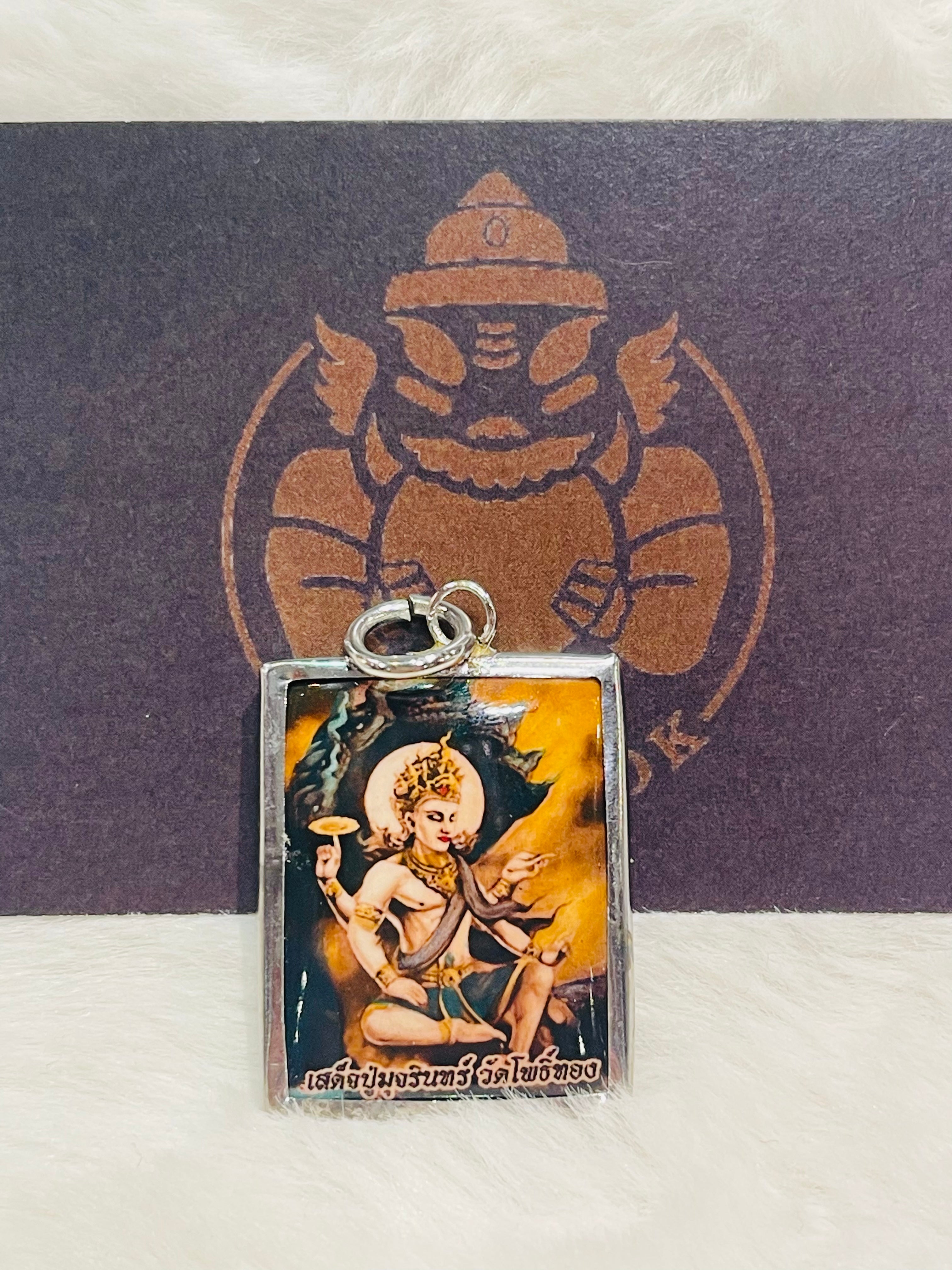
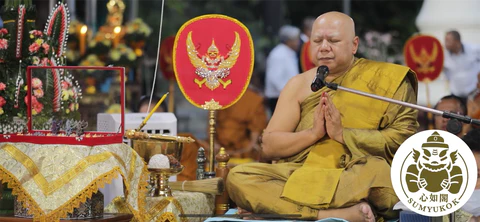
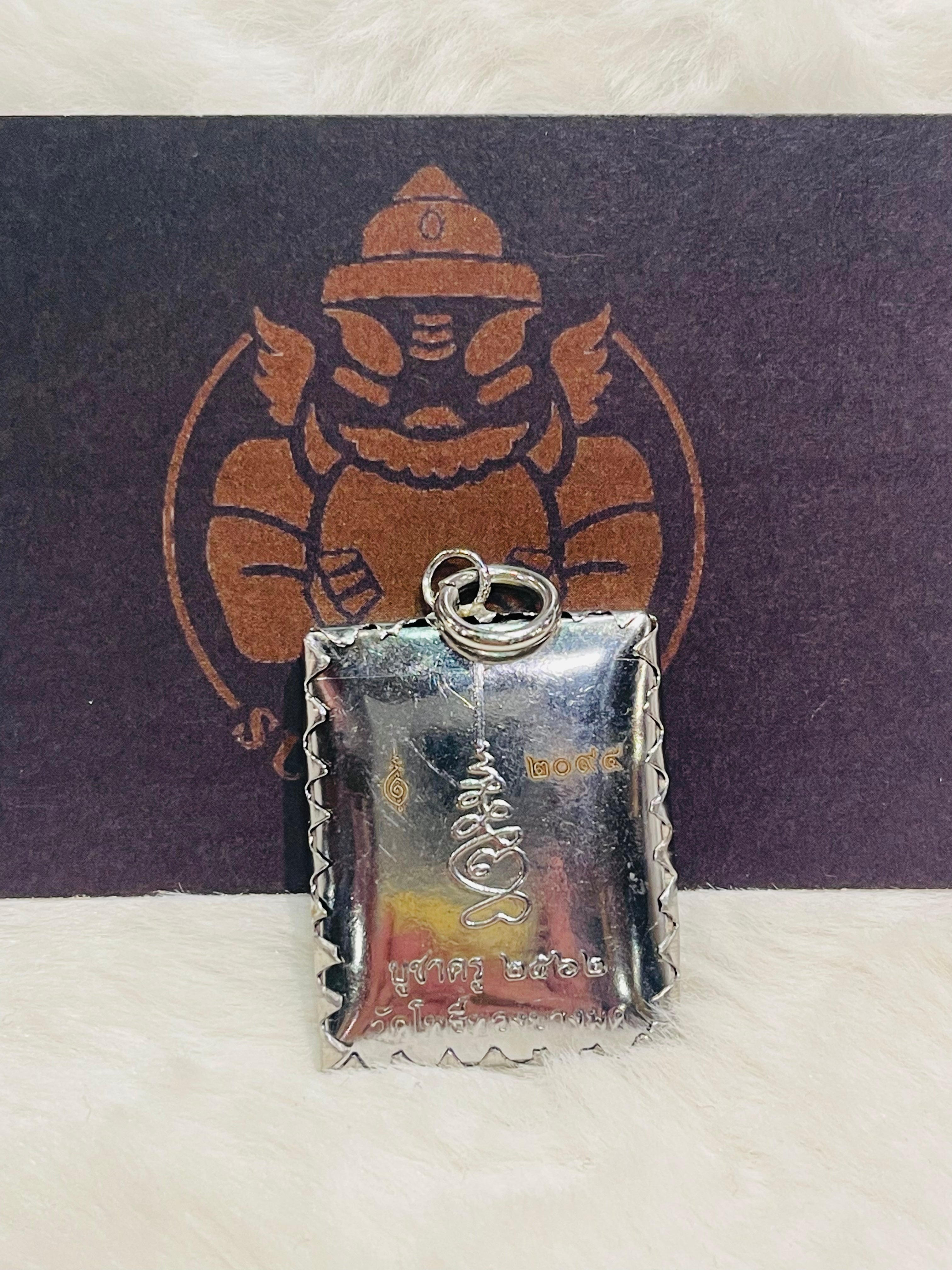
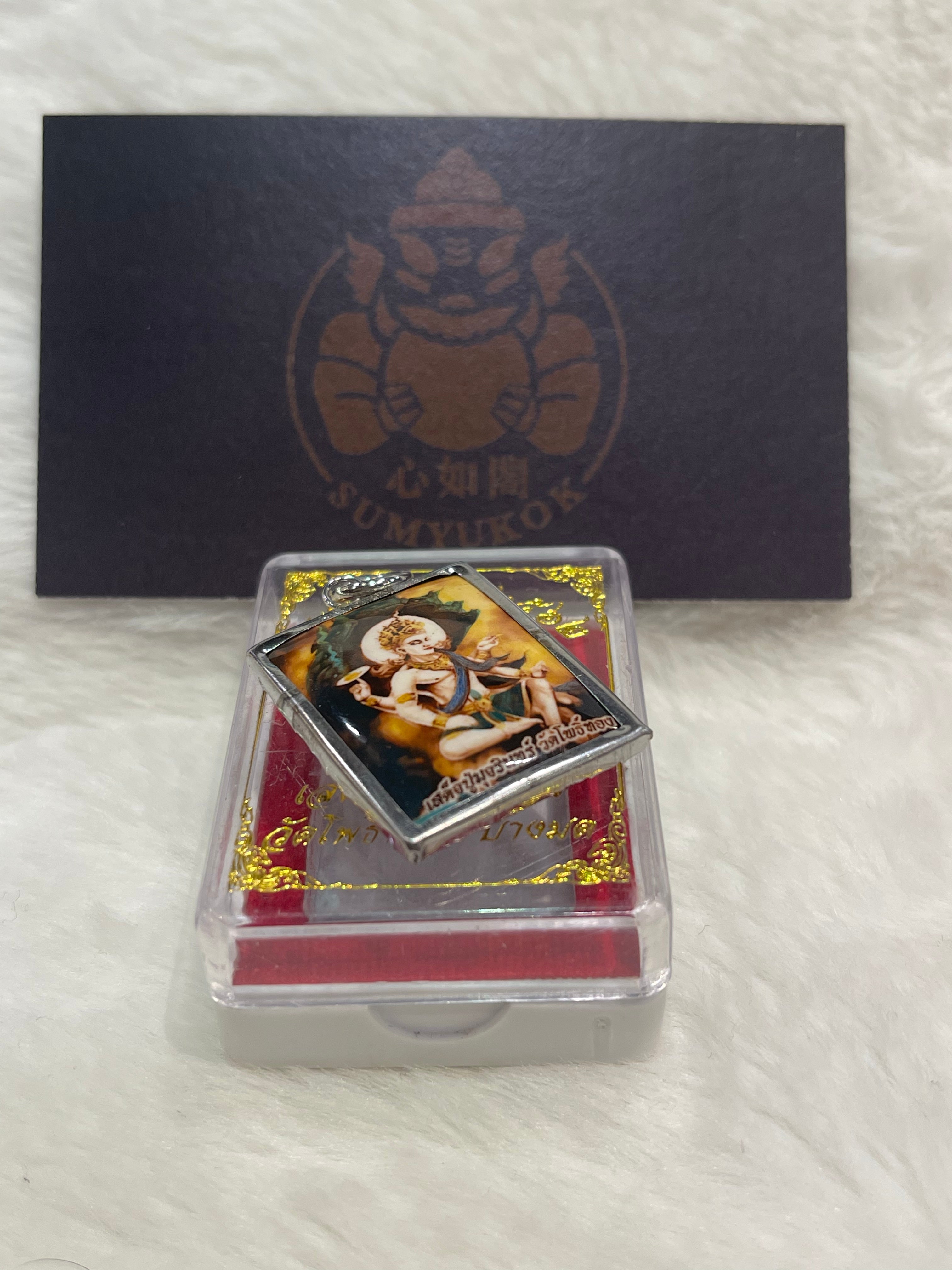
【master】 Luang Phor Wara Luang Phor Wara (หลวงพ่อวราห์) and the temple's many high monks
【temple】 Wat Pho Thong วัดโพธิ์ทอง
[Year] Buddhist Era 2562
【size】 Approximately 3.5 cm high, 2.4 cm wide, and 0.6 cm thick.
[Efficacy of Sacred Objects]
Naga is the King of Wealth 🤴 , possessing the power to summon wealth and money, and like the ocean of water seeping into a sand pit, inspiring believers to fulfill their desires and crave anything that will bring incredible gains, making you rich quickly. All the treasures of wealth are acquired unknowingly. Money and wealth suddenly increased. Unexpected good fortune will bring you joy wherever you go . Have peace and happiness and escape danger !
It attracts and protects wealth, facilitates the acquisition of abundant riches, solidifies the foundation of one's career, brings the assistance of benefactors, ensures good fortune, brings super luck, provides super protection against disasters and dangers, wards off evil spirits, protects against infringement and persecution, helps one defeat opponents, easily gains an advantage, and assists in gaining authority and wealth. It can help the wearer attract wealth and treasures, ensure smooth career progress, travel safely, achieve success in all endeavors, and change one's luck.
[Introduction to Naga Water Dragon]
The water dragon, known as "Phayana" in Thai, is also called Naga, Naga, or Naga. In Thailand, it is considered a guardian deity, sometimes referred to as the Dragon God, Snake King, or Dragon King. It is often seen on temple gates and in the magical tattoos of monks. The water dragon is a famous auspicious creature in Thailand, representing wealth and good fortune, and is deeply intertwined with Thai life. It symbolizes good luck, popularity, power, and wealth. Water represents wealth, and the water dragon is a divine beast that can move freely in water. As a protector of Buddha, it also represents authority and can bless the wearer with safety and success in all endeavors. It is believed to ward off evil spirits, bring good fortune, and can be placed in shops, homes, or in auspicious locations for wealth.
【The Legend of the Water Dragon of Payana】
Naga (Sanskrit: नाग , IAST : Nāga ) is a serpent deity in Hindu mythology. This creature resembles a giant snake with one or more heads; its image frequently appears in Brahmanical, Hindu, and Buddhist scriptures.
Originally, the Naga was a serpent king with a snake's head and a human body. It was only when Buddhist scriptures were translated that it was rendered as a dragon king. Sometimes it is depicted as a seven-headed serpent, and sometimes it is simplified to a five-headed, one-headed, or nine-headed form. Whether as a dragon king or a serpent king, the Naga is the ruler of water sources and the guardian of water, including rivers, lakes, and seas, which are all within their jurisdiction. Phayana is a very important guardian deity in Thailand. Some say it is the snake king, while others say it is an incarnation of a dragon.
In Thailand, they are called Nang or Phayanan. They have a golden crown on their heads, red eyes , and fish-like scales, but the scales come in various colors, distinguished by different blessings and good fortune. Some are green, some are black, some are seven-colored; He is also Phra Vishnu 's throne and protector. He has a gigantic body , infinitely long, and a thousand heads.
It has been connected with humanity throughout many eras. Naga is considered the creator of all things. Based on the historical origins of the capital Vientiane, the city of the Lao People's Democratic Republic is named after the Naga language. Therefore, it can be regarded as power and prestige in the form of power. Those who make offerings will enjoy good fortune: wealth, money, luck, compassion, popularity, and the favor of the gods.
[Introduction to Luang Phor Wara]
Luang Phor Wara was born into a Muslim family in Thailand. His mother was a Buddhist. In his youth, Luang Phor Wara suffered a severe illness and was saved by a dragon deity. From then on, he gradually developed an interest in Buddhism. However, his father was a high-ranking elder among non-Buddhist sects, and due to his father's influence, the idea of becoming a monk remained just a thought, unable to be put into practice. Soon after, his father died unexpectedly, and Luang Phor Wara became a monk. The dragon deity, with whom he had a karmic connection, repeatedly imparted secret teachings to him.
Luang Phor Wara later learned to make Garuda amulets. It was this dragon god who told his master that he also had a karmic connection with the Garuda god in a past life. So he told his master that he could make Garuda amulets for believers to wear. However, at that time, his master felt that his spiritual practice was not enough and he had not learned any related methods, so he did not agree to make them.
It wasn't until one day during meditation that Luang Phor Waa encountered Luang Phor Opahi (a very famous monk in Thai history, highly regarded in Thai amulets and sacred objects), and thus became Luang Phor Opahi's disciple. Luang Phor Opahi generously imparted all his knowledge, and as a result, Luang Phor Waa's spiritual practice improved significantly.
Under the guidance of Shenlong and Luang Phor Opasi on how to create sacred eagle amulets, the master decided to create sacred eagle amulets for devotees to wear. The eagle amulets consecrated by Luang Phor Wara are incredibly efficacious and have an excellent reputation 👍🏻 . Most importantly, he is currently the only monk to have been commissioned by the royal family to create eagle amulets.
Luang Phor Wara's creations of the Garuda in Thailand are highly sought-after sacred objects by political figures, business elites, royalty, and nobles.